
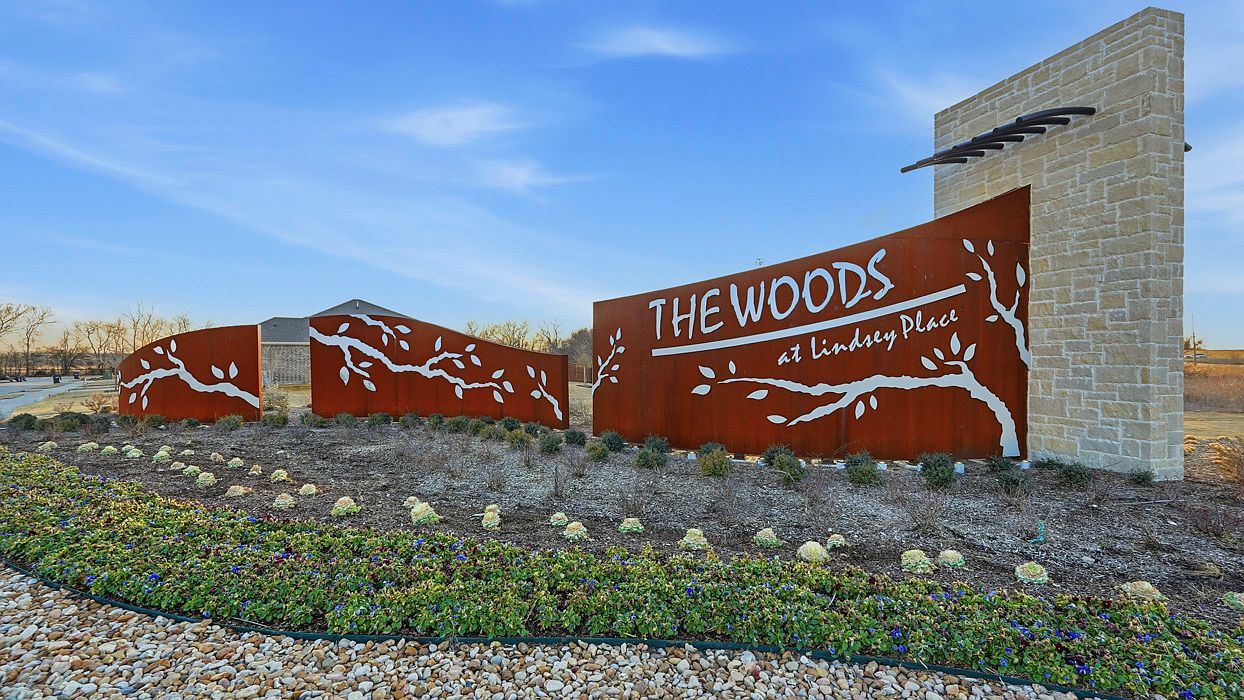
If you're one of the hundreds of thousands of Americans packing boxes for North Texas this year, you already know the broad strokes: no state income tax, a red-hot job market, and more house for less money. What you may not know yet is where in Dallas-Fort Worth to point the moving truck — and why a fast-growing, attainably priced community like The Woods at Lindsey Place in Anna has become a landing spot of choice for relocators coming out of California, Virginia, Illinois, and Florida specifically.
This isn't a coincidence. Each of those states is sending people to Texas for a distinct reason, and — remarkably — each of those reasons maps almost perfectly onto what The Woods at Lindsey Place and the broader Anna/Prosper corridor were built to offer. Let's walk through the data.
The Big Picture: Texas Is Winning the Relocation War
The numbers on Texas as a destination state are no longer a trend — they're a phenomenon:
- Texas added roughly 391,243 new residents between July 2024 and July 2025, the largest absolute population gain of any state in the country, according to Census Bureau estimates.
- Dallas-Fort Worth has ranked the #1 growth metro in the nation on the U-Haul Growth Index for two consecutive years running.
- Over a recent 12-month tracking period, more than 265,000 out-of-state adults moved to Texas — an average of about 726 people every single day.
- Nearly 32% of all out-of-state movers to Texas landed specifically in the Dallas-Fort Worth-Arlington area, more than any other Texas metro, including Houston and Austin.
- Continued corporate relocations and expansions — Tesla, Oracle, Hewlett Packard Enterprise, and others — keep feeding that inbound pipeline from high-cost states.
That's the backdrop. Now let's break down why buyers from each of these four specific states are showing up in growth corridors like Anna.
California: Trading the Coast for Actual Homeownership
California is currently the only state in the country experiencing outright population decline, and it isn't close — the U-Haul Growth Index has ranked California dead last, 50th out of 50 states, for six consecutive years running. Roughly 230,000 Californians per year leave for other states on a net basis, and California accounts for the single largest share of any state sending new residents to Texas — about 14% of all inbound out-of-state moves.
A landmark UC Berkeley California Policy Lab study, published in March 2026 and built on anonymized credit bureau data tracking Californians from 2016 to 2025, quantified exactly what they gain by leaving:
- Average monthly housing cost in California: $2,376
- Average monthly housing cost after moving out of state: $1,705
- Average monthly savings: $672 ($8,064 a year)
- Average home price in the new location: $398,000 lower
- Californians who moved were 48% more likely to own a home after seven years than similar Californians who stayed
Why this matters for The Woods at Lindsey Place: A brand-new home starting in the high $290s is not a concept that exists anywhere within a two-hour drive of the California coast. For a Californian used to a $2,376 monthly housing nut and a home price hundreds of thousands of dollars higher than what Anna offers, this community isn't a downgrade — it's the first time in years that homeownership math actually works. And the growth-corridor story is familiar to Californians in a specific way: this is the same "buy in the path of progress" dynamic that made early buyers in Silicon Valley, Orange County, and the Inland Empire wealthy decades ago. Anna, sitting on the leading edge of the U.S. 75 corridor with more than $3 billion in master-planned investment breaking ground around it, is offering that same early-innings opportunity — just at Texas prices.
Illinois: Escaping Cold, Taxes, and a Shrinking Tax Base
Illinois has been one of the most consistent outbound states in the country. It has landed near the very bottom of the U-Haul Growth Index alongside California, New York, and New Jersey. Illinois represents roughly 3.7% of all out-of-state arrivals into Texas, putting it in the top five sending states nationally. The drivers are well documented: Chicago in particular is seeing sustained outflow tied to rising property taxes, urban crime concerns, and high cost of living, while the state's harsh winters push people toward warmer, lower-cost states like Texas, Tennessee, and Florida.
Why this matters for The Woods at Lindsey Place: Illinois transplants are often escaping two things at once — climate and property tax burden — and Anna solves for both. Texas has no state income tax, and while property taxes here aren't nothing, they fund some of the fastest-improving infrastructure and school investment in the state rather than propping up a shrinking, aging tax base. For a Chicago-area family used to brutal winters and a flat or declining home value, a brand-new smart-home-equipped house in a community adding retail, schools, and amenities in real time is a fundamentally different proposition — appreciation potential instead of managed decline.
Virginia: Following the Jobs Out of the Beltway
Virginia's migration story to Texas is newer and sharper than the others, and it's tied directly to shifts in the federal workforce. Virginia is home to one of the largest concentrations of federal and military employment in the country — the Pentagon in Arlington alone accounts for more than 23,000 military and civilian personnel, and Naval Station Norfolk is the largest naval base in the world. Between 2020 and 2026, more than 18,000 military members, veterans, and government contractors relocated from Virginia to Texas, with Dallas-Fort Worth capturing the majority of that flow. Compounding this, federal workforce reductions have cut more than 20,000 government jobs from Virginia in a single recent year, reversing years of steady growth in the Commonwealth's federal civilian employment base.
The financial case is stark. Virginia's top income tax rate of 5.75% kicks in at just $17,000 of income — one of the lowest thresholds in the country — versus Texas's constitutionally protected 0%. On a $100,000 salary, that's roughly $5,175 saved per year simply by crossing state lines. A Northern Virginia lifestyle costing $10,000 a month runs closer to $6,700 a month in Dallas, and Dallas-area buyers typically get nearly 80% more square footage for the same money.
Why this matters for The Woods at Lindsey Place: North Texas has its own growing defense, aerospace, and government-contractor employment base anchored by companies like Lockheed Martin, giving Virginia transplants a landing pad that isn't a total career reset. And the profile fits: many of these buyers are used to master-planned Northern Virginia communities with strong school zoning and HOA-run amenities — exactly the model Anna ISD and communities like The Woods at Lindsey Place are built around, just without the Beltway price tag or commute.
Florida: A Different Kind of Boomtown Buyer
Florida is a slightly different case — it's still a net gaining state overall, ranking second in the nation for net migration with nearly 197,000 new residents in the most recent period. But there's a specific and growing subset of Floridians choosing Texas instead: exclusive migration data shows more Floridians are moving to Texas than the reverse, with Florida representing about 9% of all out-of-state arrivals into Texas — the second-largest sending state after California. Florida's domestic net migration has also cooled dramatically, dropping from roughly 314,000 in 2022 to about 64,000 more recently, an 80% decline, as insurance costs, hurricane risk, and rapidly rising home prices in Florida's boom markets have caught up with buyers.
Why this matters for The Woods at Lindsey Place: Floridians moving to North Texas are typically trading one high-growth Sun Belt boomtown for another — but one without hurricane exposure, skyrocketing property insurance premiums, or the coastal price inflation that has hit Florida's own new-construction market. The community-lifestyle instinct is the same: Florida buyers are accustomed to master-planned developments with resort-style amenities, HOA-run lifestyle programming, and new-construction neighborhoods built around a retail core — which is precisely the model unfolding around Anna's Rosamond Crossing and Rosamond Town Center retail corridor.
The Common Thread: They've All Seen This Movie Before
Here's what ties all four of these buyer profiles together, and why Anna specifically — rather than a random Texas suburb — keeps showing up on their shortlists: every one of these states has, or had, its own version of a Windsong Ranch.
Windsong Ranch in nearby Prosper, developed by Tellus Group, is the gold standard for what a master-planned Collin County community can become at full maturity:
- Spans more than 2,000 acres
- Anchored by The Lagoon, a 5-acre crystal-clear freshwater lagoon with three white-sand beaches
- More than 30 miles of hike-and-bike trails
- An 18-hole championship disc golf course, tennis and pickleball complex, multiple resort-style pools, a dog park, and a full-time Lifestyle Department running year-round events
- At full build-out: 3,300+ homes across four amenity centers and four schools, zoned to top-ranked Prosper ISD
- Homes today range from roughly 2,959 to 4,098 square feet, priced from the mid-$600s to $1.3 million — reflecting a now-mature, largely sold-out community
As Tellus Group President Craig Martin has put it, Windsong Ranch draws residents from "all fifty states" who decide to live there before they've even started house-hunting — that's the pull of a fully realized amenity-driven community.
The Woods at Lindsey Place isn't Windsong Ranch — it's what Windsong Ranch looked like at the very beginning, a decade before the lagoon, before the sold-out status, before the $600,000+ price floor. Anna today is where Prosper was roughly ten years ago: on the same U.S. 75/380 growth corridor, with billions in master-planned capital — Sherley Farms ($1.5 billion, from the same Tellus Group team behind Windsong Ranch), AnaCapri ($1.8 billion, its own crystal lagoon), and Crystal Park ($600 million-plus) — breaking ground right now rather than fully built out.
For relocators from California, Virginia, Illinois, and Florida, that timing is the entire pitch. They aren't buying into a finished product at a finished-product price. They're buying the on-ramp — a brand-new, smart-equipped D.R. Horton home starting in the high $290s, in Anna ISD schools, less than a mile from U.S. 75, with a Kroger Marketplace and 355,000+ square feet of retail already under construction — in the same growth pattern that turned communities like Windsong Ranch into some of the most sought-after zip codes in North Texas.
The Bottom Line
Four different states, four different reasons to leave — cost of living, taxes, weather, federal job cuts — and one shared conclusion: North Texas offers a rare combination of affordability and forward motion that home states no longer provide. The Woods at Lindsey Place puts relocating buyers directly in the path of that growth, at a price point that still makes financial sense on day one, not just after a decade of appreciation.
Pricing, incentives, and available inventory change frequently. Always confirm current details when touring, and remember: bring your own agent and register them on your first community visit to preserve your representation and access to builder incentives.
FROM OUR BLOG


New Homes Under $600,000 Near Prosper, Texas
New Homes Under $600,000 Near Prosper, Texas North Dallas · New Construction · Call/Text 469.230.1409 Prosper has built a reputation as one of North Dallas's most desirable — and most expensive — new construction markets. With home prices in some of Prosper's newer luxury communities pushing well
Dallas North Tollway to reach Prosper and Celina north of Dallas
How the Dallas North Tollway Expansion Could Change Home Values in Prosper and Celina North Dallas · Market Insights · Call/Text 469.230.1409 If you own a home in Prosper or Celina — or you're weighing whether to buy in one of these communities — there's a piece of infrastructure news you shouldn't
McKinney Real Estate Market Updates North Dallas Living - Willow Wood
Willow Wood: The Amenity-Rich Melissa ISD Community That Has It All by OnDemand Realty July 25, 2026 02:47 PM Willow Wood: The Amenity-Rich Melissa ISD Community That Has It All A 306-acre master-planned community, two of DFW's most respected builders, resort-style amenities, and top-rated Meliss